Engineering Immersive Experiences
I’m an engineer who loves turning ideas into experiences. My work blends automation, modeling, and design thinking with a deep interest in themed entertainment. Here, you’ll find projects that reflect how I approach engineering with curiosity, creativity, and a guest-centered mindset.
Website Overview
About Me
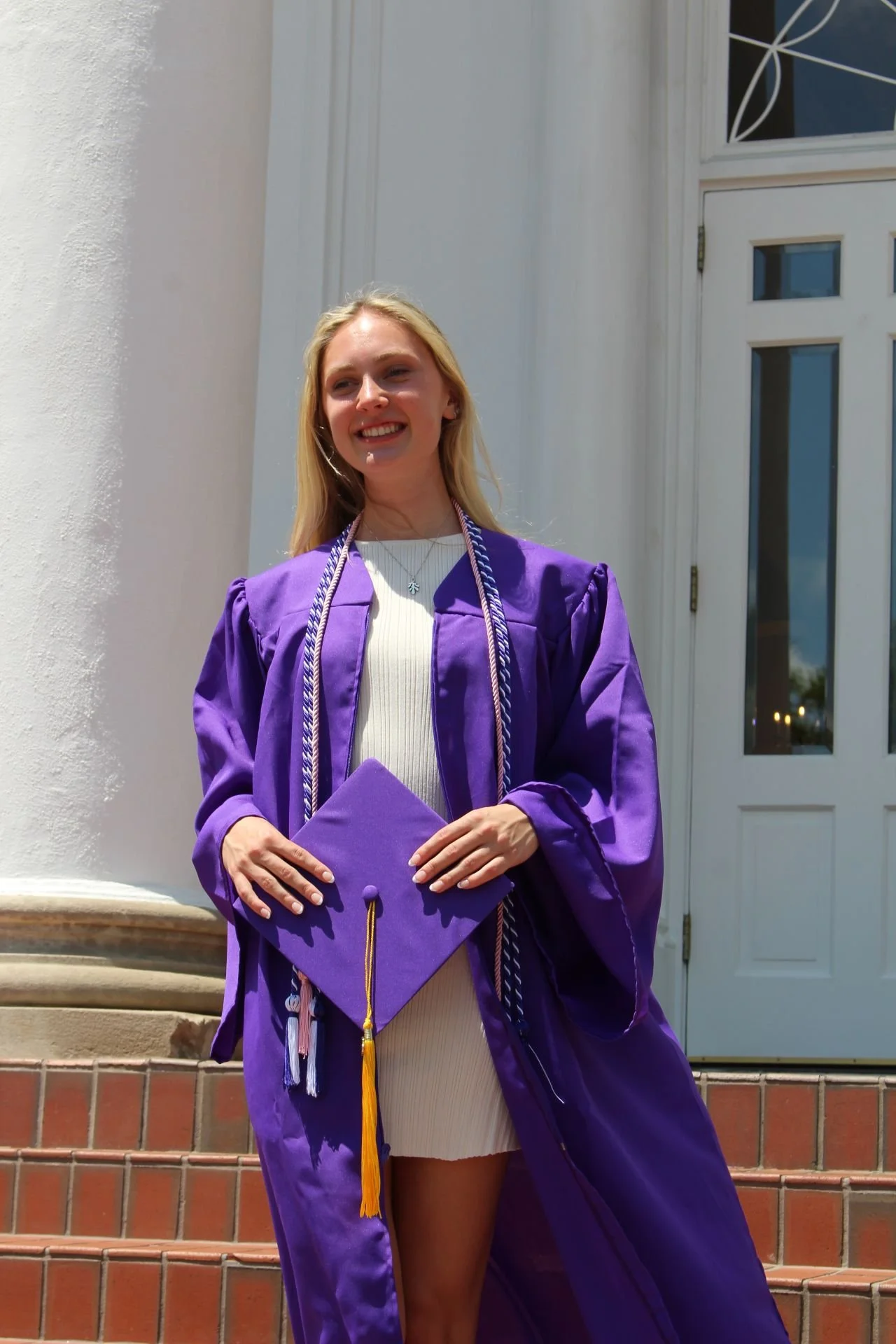
I’m Dalia Widmer, an engineer and communicator passionate about creating immersive, intuitive experiences. I recently completed my B.S. in Electrical Engineering with a minor in Mathematics at High Point University and am now pursuing my M.A. in Communication and Business Leadership. My work sits at the intersection of creativity and technical problem-solving, combining automation, simulation, and user-centered design.
I’ve gained experience through engineering internships, automation projects, simulation modeling, and interdisciplinary coursework — all of which shaped my interest in themed entertainment. My goal is to design systems and experiences that feel seamless, engaging, and meaningful for guests.
Outside of engineering, I enjoy storytelling, writing, exploring themed environments, and learning how technology can support memorable experiences.
Technical Skills
Creative + Communication Skills
Automation and controls
Ignition SCADA
PLC logic and tag scripting
COMSOL Multiphysics
LTspice
MATLAB
Circuit design and analysis
Prototyping and testing
Technical writing
Visual communication
User-centered design
Presentation development
Storytelling
Cross-functional collaboration
Fun Facts
I love themed entertainment and hope to work on ride and show systems.
My top three roller coasters are Hagrid’s Magical Creatures Motorbike Adventure, Sirens’ Curse, and Revenge of the Mummy.
I write a fantasy book series in my free time.
I was club soccer captain during undergrad.
I enjoy creating TikTok content and documenting my adventures.
I’m from Richmond, VA and love watching scary movies with my family.
Portfolio
A collection of my engineering, simulation, automation, and creative projects. Each project highlights my technical abilities, problem-solving approach, and the interdisciplinary work that reflects how I think as an engineer and communicator.
Book Buddy
-
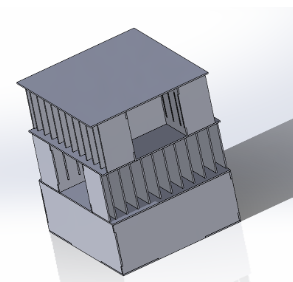
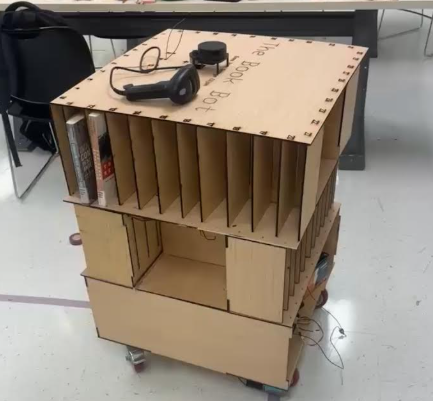
Book Buddy is a four-wheel autonomous book cart designed to assist library staff with transporting books across indoor environments for my senior capstone project. The system integrates LIDAR-based detection, LED slot indicators, barcode scanning, and structured test procedures to ensure safe and reliable operation. Our goal was to create a functional prototype capable of navigating hallways, identifying obstacles, and delivering books to designated locations.
-
I contributed to the development, testing, and validation of the cart’s navigation and user experience. My responsibilities included:
Supporting controls logic development for the motor-driven front wheels
Design of cart prototype and 3D prints
Assisting with navigation testing, obstacle validation, and safety checks
Helping design and carry out formal test procedures aligned with engineering requirements
Preparing documentation for our design reviews and final demonstration
Integration of LED feedback for book slot identification
-
LIDAR sensors
Motor controllers
Solidworks / 3D printing
Arduino / microcontroller programming
Prototyping & mechanical integration
User-centered design
Structured testing procedures
Documentation and reporting
-
1. Problem Identification
I was working in the library when my boss fell ill and was unable to push the heavy carts, leading to the idea of the Book Buddy. Libraries need a reliable, autonomous way to transport books safely without requiring staff to manually carry loads across floors or between sections.2. Concept Development
We designed a four-wheel system with two motor-driven wheels in the front and two passive wheels in the back, ensuring balanced turning and stability. We included secure slots for books, along with an identification system for smooth book reclassification.3. Prototyping
The team built a wood-framed cart and integrated sensors, motor drivers, and LED indicators. Couplers and wheel attachments were iterated to improve alignment and movement.4. Navigation & Testing
We developed step-by-step test plans, including:obstacle detection
hallway navigation
book identification
LED indicator responsiveness
5. Refinement
Based on test data, we made adjustments to wheel alignment, LED brightness, and sensor placement to improve consistency and usability. -
Successfully demonstrated autonomous forward movement and directional response
Implemented functional LED slot indicators for book pickup/delivery
Improved structural stability through multiple mechanical iterations
Completed a full suite of formal test procedures with documented results
Mohawk Industries Automation Internship
-
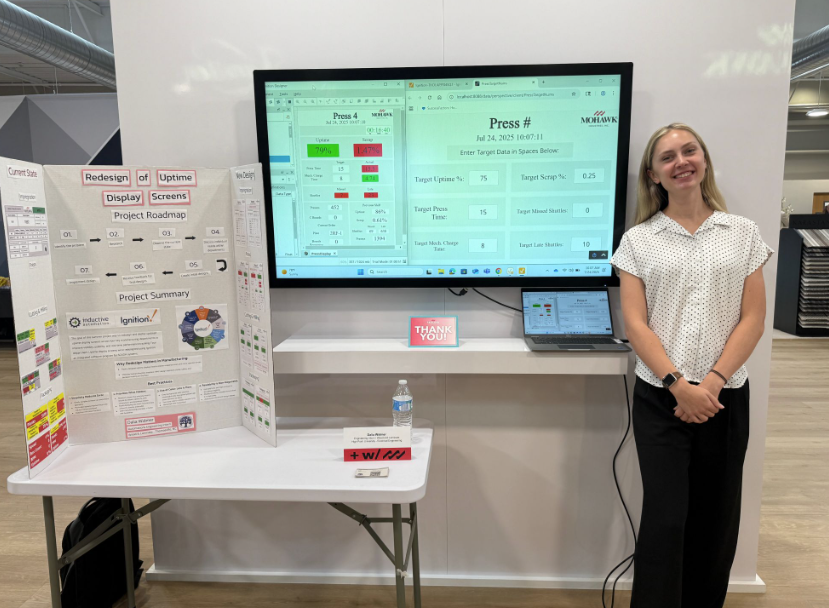
During my Automation Engineering Internship at Mohawk Industries, I designed and improved real-time uptime dashboards using Ignition SCADA and PLC data. These dashboards were used across their four manufacturing departments to help operators and supervisors monitor machine performance, identify downtime, and make faster production decisions. My work focused on developing functional screens, writing and testing tag scripts, and ensuring data flowed accurately from PLCs to the HMI.
-
I was responsible for both visual and functional aspects of the SCADA system, including:
Designing and updating HMI screens to clearly display uptime, downtime, and machine status
Writing custom tag scripts (ex: MachineUptimeSeconds, MachineDowntimeSeconds)
Pulling data from PLCs and verifying accuracy in Ignition
Troubleshooting tag behavior and iterating based on operator feedback
Supporting cross-department deployment of the new screen format
Preparing documentation for engineering and supervisor review
-
Ignition SCADA
PLC tags & scripting
HMI design
Data visualization
Troubleshooting & debugging
Operator feedback integration
Technical documentation
-
1. Understanding Department Needs
Met with supervisors to understand how each department measures productivity and what information operators need to see at a glance.2. Screen Redesign
Created clear, intuitive screens displaying:live machine uptime and downtime
run status indicators
shift-based counters
machine IDs and station info
3. Tag Scripting Development
Developed scripts to calculate and reset uptime/downtime values, using real-time tag changes from PLCs. Ensured accuracy through cycle testing and historical trend checks.4. Data Verification & Troubleshooting
Tested tags under real machine conditions to confirm:accurate counting
proper resetting
correct triggering on machine start/stop events
5. Deployment & Feedback
Rolled out prototype screens to operators, collected feedback, and refined visual layout and logic for clarity and consistency across departments. -
Delivered updated uptime dashboards used across four manufacturing departments
Improved visibility into machine performance and shift trends
Enhanced operator usability through streamlined screen layouts
Created reliable custom tag scripts for uptime/downtime calculation
Strengthened cross-functional communication with engineering and production teams
SmartPark Parking System
-
SmartPark is a design thinking project I completed within a team in graduate school, focused on understanding and improving the student parking experience at High Point University. Our team conducted interviews, mapped user frustrations, identified system breakdowns, and developed concept solutions aimed at reducing stress, improving communication, and making parking more predictable for students.
-
I led several key parts of the design thinking process, including:
Conducting student interviews and gathering firsthand insights
Updating our Empathize/Define findings after additional outreach
Creating affinity clusters, experience diagrams, and Rose–Bud–Thorn analyses
Helping shape the initial concept direction for SmartPark
Supporting early poster development to communicate our idea visually
Synthesizing data into clear themes that guided our final concept
-
User interviews
Empathy mapping
Affinity clustering
Rose–Bud–Thorn
Experience diagramming
Concept development
Visual communication
Collaborative ideation
-
1. Empathize
Interviewed students to understand daily parking challenges, emotional responses, and recurring behavior patterns. Common themes included uncertainty, frustration during peak hours, and a lack of real-time parking information.2. Define
Created affinity clusters and experience diagrams to uncover root causes and summarize problem areas. Defined our main problem statement:Students need a reliable, predictable way to understand parking availability so they can reduce stress and plan their day more effectively.
3. Ideate
Generated creative solutions through brainstorming, Alternative Worlds, and constraints-free “magic thinking.” Explored ideas involving real-time updates, route recommendations, and campus-wide communication improvements.4. Prototype
Developed early poster concepts and low-fidelity visuals to communicate how SmartPark would deliver information and improve student flow. Focused on clarity, accessibility, and ease of use.5. Test (Concept-Level)
Revisited interviewees to gather feedback on the SmartPark idea. Adjusted communication and feature priorities based on student responses. -
Identified recurring pain points in student parking behavior and communication gaps
Synthesized interview findings into clear opportunity areas
Developed a concept for a user-centered parking information solution
Created early prototypes and poster drafts demonstrating the SmartPark approach
Strengthened our understanding of campus mobility challenges through student feedback
Creative Personal Projects
-
Outside of engineering, I work on creative projects that strengthen my storytelling, communication, and branding skills. These projects represent the imaginative side of my work and highlight how I combine creativity with problem-solving, whether I’m writing, building a personal brand, or exploring narrative design.
This page includes two ongoing projects: my TikTok content creation and my original fantasy book series.
-
Overview
I create lifestyle, gym, fashion, and post-grad content on TikTok, where I focus on storytelling and building a relatable, engaging digital presence. My content blends authenticity with strategy, helping me grow an audience and collaborate with brands.
What I Do
Create and edit short-form videos
Develop content themes aligned with personal branding
Track analytics to understand what resonates with my audience
Collaborate with brands in beauty, fashion, lifestyle, and fitness
Document travels, events, and everyday experiences in a fun, relatable way
Skills Developed
Digital storytelling
Brand communication
Video editing
Audience analysis
Visual consistency and tone development
-
Overview
I am currently writing an original fantasy series that explores seven realms, political structures, magic systems, and character-driven storytelling. The project includes worldbuilding, character arcs, cultural design, and long-form narrative development.
My series draws inspiration from the popular fantasy series Throne of Glass, especially the way Sarah J. Maas intertwines complex worldbuilding with grounded, real-world insights.
What I Do
Develop magic systems, political dynamics, and lore
Outline book structure and character development
Build a cohesive universe with rules, constraints, and cultural depth
Explore themes of identity, power, sacrifice, and legacy
Write drafts of scenes, dialogue, and major plot points
Skills Developed
Worldbuilding
Narrative structure
Character design
Long-form writing
Creativity and thematic development
Resume
You can download my full resume below